



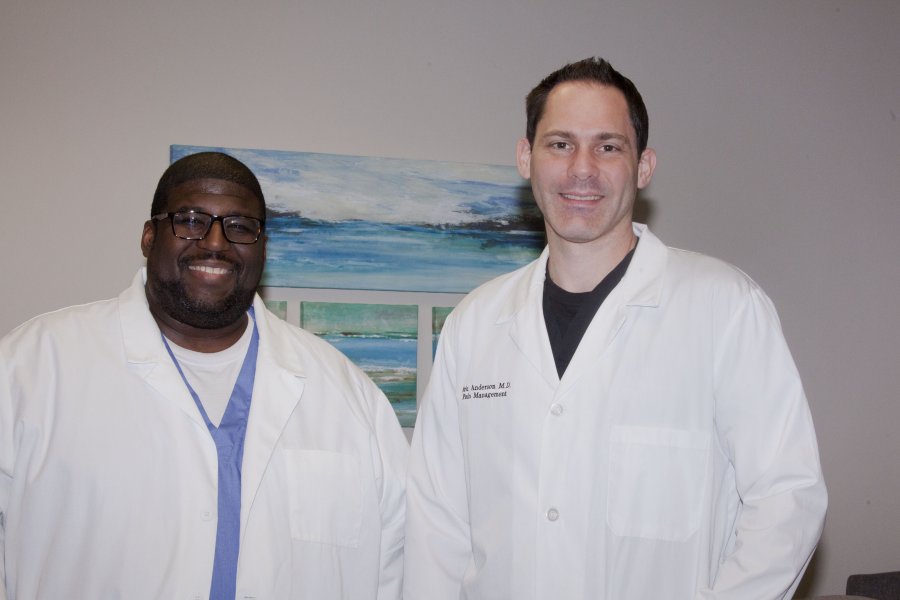
It’s no secret that Dr. Eric Anderson and Dr. John Broadnax at Advanced Pain Institute are experts at head-to-toe pain management. And one of the biggest reasons why is that, for certain advanced treatments, they rely on real-world data to let them know whether they are on the right track.
This is where trial periods matter, especially for treatments such as spinal cord stimulation and peripheral nerve stimulation. Rather than jumping straight to implanting a permanent device near the spine or a troublesome nerve to change how pain signals travel, they have patients undergo a temporary trial to see if the procedure relieves their chronic pain and improves their quality of life.
In other words, the treatment must prove itself before anyone commits to a permanent solution.
“To know if anything works, you have to test it first,” Dr. Anderson said. “We place temporary leads and have you spend a few days walking around the house, getting out of bed, going to the grocery store, getting in and out of the car, etc. If you have less pain, we know we can proceed to a permanent solution.”
During this first stage, Advanced Pain Institute uses X-ray guidance to place a small catheter-like lead in the area where the pain originates. The lead is secured externally, meaning there are no incisions, and patients can quickly begin evaluating how well the therapy works in their everyday lives.
“What we’re going for is less pain, better sleep, and helping you walk better,” Dr. Broadnax added. “But to know if it works, we test it. That’s why it’s called a trial period.”
To learn more about how Advanced Pain Institute of Texas can help you, visit apitexas.com or call 972-866-4246. Office hours are Monday through Friday from 8 a.m. to 5 p.m.
(Sponsored content by Steve Gamel)