



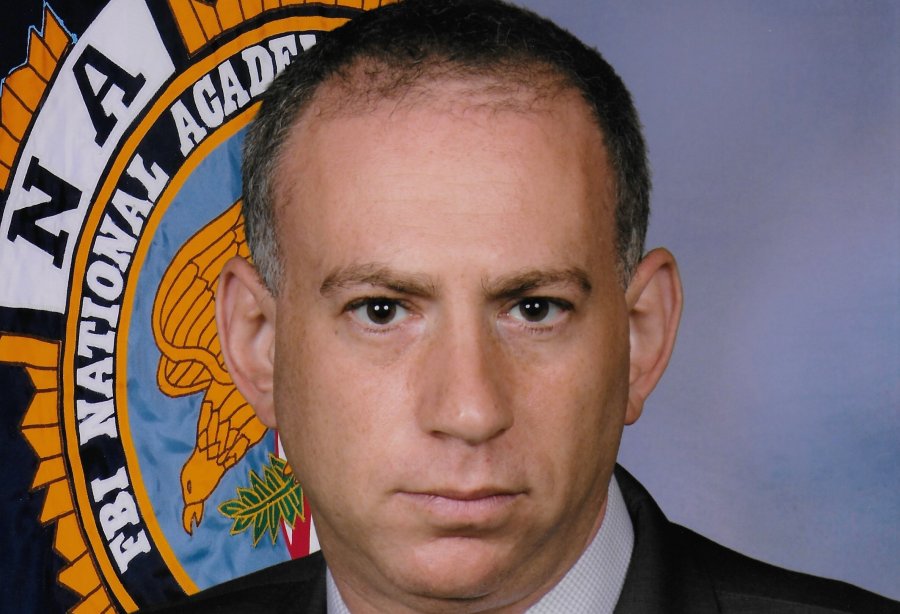
By Steven Weiss, NYPD Lieutenant (Ret.)
Public debate over Automated License Plate Reader (ALPR) technology has intensified in many communities, including here in North Texas. While privacy concerns deserve serious consideration, much of the discussion has been driven by misconceptions about how the technology works and how law enforcement uses it. In some places, the debate has escalated beyond disagreement and resulted in the vandalism of ALPR equipment.
After more than two decades investigating violent crime with the New York City Police Department, I learned that good police work depends on good information. Throughout my career, ALPR technology proved to be one of the most valuable investigative tools available. It helped identify suspects, recover stolen vehicles, locate missing people and generate investigative leads that otherwise might never have existed.
One of the biggest misconceptions I hear is that ALPR systems are designed to “track everyone.” That simply wasn’t my experience. While the cameras capture license plates that are visible on public roads, law enforcement uses the information to support criminal investigations, not to monitor the daily movements of ordinary citizens.
The reality is that detectives have neither the time nor the interest to track law-abiding people. They’re trying to solve violent crimes, find missing people, identify suspects, protect the public, and just as importantly, eliminate innocent people from suspicion. That’s where ALPR technology proves its value. It doesn’t just help identify the right suspect; it can also help investigators determine that a vehicle wasn’t involved, allowing detectives to focus their attention where it belongs.
None of this means ALPR systems should operate without oversight. They shouldn’t. Strong policies matter. Searches should be logged. Access should be restricted. Supervisors should review how the system is used. If someone abuses the system, there should be consequences.
Can the technology be misused? Certainly. Every profession has people who violate policy or abuse their authority, and law enforcement is no exception. But those cases are the exception, not the rule. When misuse occurs, it has resulted in disciplinary action, termination, and, in some cases, criminal prosecution. That’s exactly how accountability is supposed to work. Like any investigative tool, ALPR technology must be used responsibly.
Supporting ALPR technology doesn’t mean dismissing privacy concerns. Communities should absolutely ask how long data is retained, who has access to it, how searches are audited, and what safeguards exist to prevent misuse. Those are fair questions. The answer isn’t to abandon the technology. It’s to insist on strong policies, transparency, and accountability.
Some opponents argue that communities with relatively low crime have little need for ALPR systems. I see it differently. Public safety isn’t just about responding after crime occurs. It’s about giving law enforcement the tools to solve crimes and prevent more victims before problems become larger ones. Even the safest communities experience stolen vehicles, missing persons, and violent offenders who cross city and county lines. Criminals don’t respect jurisdictional boundaries, and modern investigations increasingly depend on regional cooperation.
Some critics are also concerned that investigators can reconstruct where a vehicle traveled weeks or months after the fact. That’s a fair question, but it’s also important to keep it in perspective. Investigators have long relied on historical evidence such as cell phone records, toll tag data, surveillance video, and financial transactions. The important question isn’t whether historical evidence exists. It’s whether clear policies govern access, retention, auditing, and authorized use.
The value of ALPR technology isn’t theoretical. In 2024, an ALPR alert helped New Jersey officers locate a homicide suspect wanted in connection with a New York City murder investigation. In 2026, Texas Department of Public Safety investigators used ALPR data during an AMBER Alert investigation to identify and locate a suspect vehicle, leading to the safe recovery of two missing children.
Those are just two of countless examples of how the technology is designed to be used. ALPR systems don’t replace detectives or traditional police work. They provide leads, evidence, and information that help investigators solve crimes more quickly, recover victims, and protect the public.
Reasonable people can disagree about public policy, and those discussions are healthy. But they should be based on facts rather than fear.
After spending more than two decades in law enforcement, overseeing countless criminal investigations and working with this technology firsthand, I’ve reached a simple conclusion: ALPR systems are one of the most valuable investigative tools available to law enforcement when they’re used responsibly.
Communities should absolutely demand transparency, accountability, and meaningful privacy protections. That responsibility rests with police chiefs, city managers, elected officials, and municipal attorneys, who should ensure that vendor contracts clearly define data ownership, limit data retention, restrict access to authorized users for legitimate law enforcement purposes, require auditing, and prohibit unauthorized disclosure or commercial use of the data.
With those safeguards in place, communities don’t have to choose between protecting privacy and protecting the public. They can and should expect both.
In my experience, ALPR technology has saved investigators valuable time, generated critical leads, helped eliminate innocent people from suspicion, and ultimately helped protect the public.
The real discussion isn’t whether the technology should exist. It’s how to implement it responsibly while preserving both individual privacy and the public safety benefits it has consistently demonstrated.
Steven Weiss is a retired Lieutenant who served 21 years with the New York City Police Department, where he was the Commanding Officer of several NYPD Precinct Detective Squads before managing the department’s CompStat process, auditing investigations and crime reduction strategies citywide for the Chief of Crime Control Strategies. He is a graduate of the FBI National Academy, holds a master’s degree in Law Enforcement and Public Safety Leadership from the University of San Diego, and is an instructor in a law enforcement graduate program. He is a resident of Bartonville and has resided in Denton County since his retirement from the NYPD.