



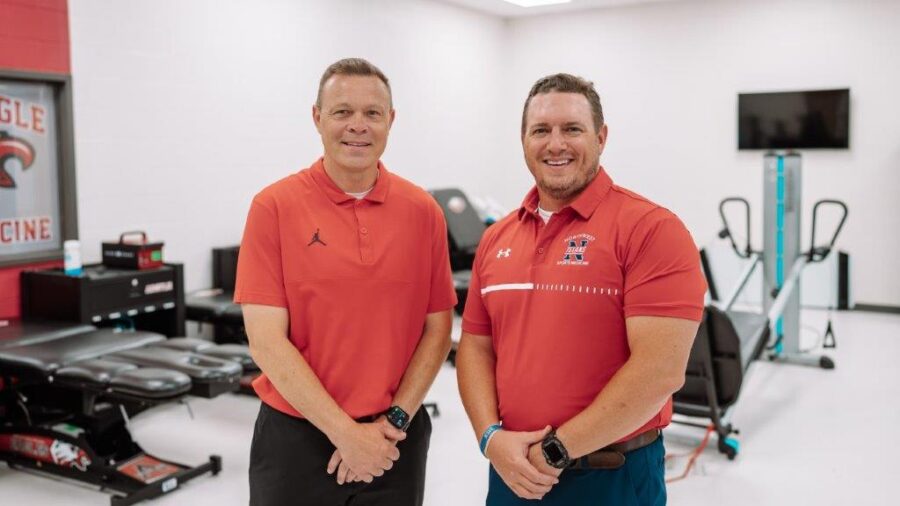
Behind every championship team and standout athlete in southern Denton County is a group of professionals working quietly to keep them healthy, safe and ready to compete.
With March recognized as National Athletic Training Month, local athletic trainers are getting well-deserved recognition for the long hours and wide-ranging responsibilities that often go unnoticed.
Across the region, high school programs consistently produce elite athletes and state champions. But maintaining peak performance requires constant care, from injury prevention to rehabilitation and return-to-play decisions.
Aaron Fowler, head athletic trainer at Argyle High School, said the job begins long before the first whistle blows.

“A typical day as a secondary school athletic trainer begins well before practices or competitions start,” Fowler said. “Mine and my staff’s morning is often spent checking in with student-athletes who are currently in rehabilitation, coordinating with coaches and school staff, and reviewing injury reports from the previous day.”
Throughout the day, trainers evaluate injuries, communicate with parents and physicians, and adjust recovery plans for athletes working their way back to competition.
By afternoon and evening, the focus shifts to preparing athletes for practices and games.
“I prepare for practices and competitions by getting the athletes ready for competition and ensuring all emergency equipment and medical supplies are ready,” Fowler said. “During practices and games, my primary responsibility is the health and safety of the student-athletes.”
At the high school level, Fowler added, the role extends beyond treatment.
“It is also about injury prevention, education, rehabilitation, and creating a safe environment where student-athletes can perform at their best,” he said.
With multiple sports in season year-round, adaptability is essential.
“Every sport is unique, and as an athletic trainer, you have to understand the nuances of each one,” said Cody Jenschke, head athletic trainer at Flower Mound High School. “During morning treatments, you might guide a pitcher through a throwing program, work through a concussion return-to-play progression with a soccer player, and then treat a swimmer with an overuse shoulder injury.”
Each sport requires a different approach to injuries, Jenschke said, noting that some athletes can compete through minor issues while others must take a more cautious path to recovery.
One of the biggest challenges facing trainers today is overuse injuries, according to Chelsee Smith, head athletic trainer at Byron Nelson High School.
“The biggest concern is the amount of overuse injuries we see in kids,” Smith said. “Club seasons happening at the same time as school seasons, private lessons and extra training leave little time for recovery.”
Another hurdle is a common misunderstanding of the profession.
“The biggest misconception is from our name,” said Gus Stevenson, head athletic trainer at Northwest High School. “Athletic trainer does not equal personal trainer. We’re more focused on managing injuries than helping someone lose 20 pounds.”
Despite the demands, trainers say the work is deeply rewarding.
“The relationships and trust built with our athletes,” said Felicia Benavides, head athletic trainer at Liberty Christian School, are what matter most. “When a kid is at their lowest … we get to help remind them their identity is not in their sport and that adversity can be the start of a comeback moment.”