



By the time you are reading this, we’ve likely hit our first official 100-degree day of 2025. Surprisingly, despite what’s been a relatively mild summer, our firefighters and paramedics have already responded to more heat-related medical emergencies than expected.
One possible reason? A false sense of safety. These days, many people rely on smartphones, smartwatches, or voice assistants like Siri to check the weather—only to hear that the outside temperature is in the low to mid 90s, which may seem bearable. But what’s often overlooked is humidity, and that’s when the heat index becomes a hidden and potentially dangerous factor.
What Is the Heat Index?
The heat index measures how hot it feels when relative humidity is added to the actual air temperature. When humidity is high, sweat doesn’t evaporate as easily, which limits your body’s ability to cool itself. As a result, people can overheat quickly without realizing they’re in danger.
According to Mayo Clinic (2025), there are two primary forms of heat-related illness:
Heat Exhaustion is serious and can include muscle cramps, headaches, dizziness, weakness, fatigue, nausea, vomiting, and cold, pale, or clammy skin. If not treated promptly, heat exhaustion can escalate to heatstroke.
Heatstroke is a life-threatening emergency, with symptoms including a rapid pulse, headache, unconsciousness, confusion or slurred speech, and a core body temperature of 104 degrees.
As we enter the hottest stretch of summer, we encourage everyone to stay alert, stay hydrated, and look out for one another. Here are steps everyone can take to avoid heat illness this summer:
- Wear loose lightweight clothing
- Drink plenty of fluids, especially water—before you feel thirsty
- Avoid strenuous activity during the hottest part of the day
- Take frequent breaks in the shade or in air-conditioned environments
- Never leave people or pets in parked vehicles—even for a short time
For the month of June, the Denton County Emergency Services District #1 responded to 290 calls, with 55% being medical related and 45% being fire or service related, and an average response time of 7:26 minutes.
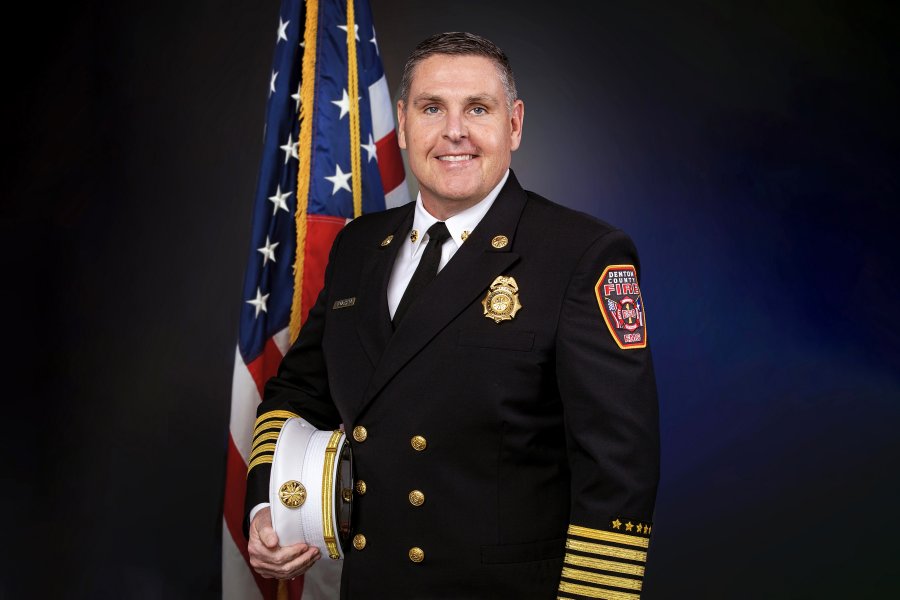
To reach Chief Vaughan, please send an email to [email protected] or call 940.464.7102.