


As we move into September, the Town of Double Oak is in one of the most important periods of our annual calendar budget season. The decisions made during these final weeks will establish our priorities for Fiscal Year 2026–27 and determine how we continue providing the services residents expect while remaining fiscally responsible.
Our budget workshops are complete, and we now move into the public hearing and adoption phase. Residents had an opportunity to participate in the public hearing on the proposed operating budget on Sept. 8. On Sept. 21, the Town is scheduled to hold its public hearing on the tax rate and consider approval of the final tax rate and budget.
While we are focused on next year’s budget, we also need to look several years down the road. Changes being discussed in Austin could have a significant impact on how cities like Double Oak fund their operations in the future.
What Is Being Discussed in Austin?
Governor Greg Abbott has made additional property-tax reform a priority for the next legislative session. His proposals include limiting local-government spending growth, requiring two-thirds voter approval for local property-tax increases, providing voters additional opportunities to roll back tax increases, limiting appraisal growth and ultimately seeking a constitutional amendment to eliminate school district property taxes for homeowners.
These are proposals and are not currently law. We don’t know what the Legislature will ultimately approve. However, the direction coming from Austin is something we need to pay attention to as we plan Double Oak’s financial future.
One proposal is particularly important for us: limiting annual local-government spending growth to population growth plus inflation or 3.5%, whichever is less.
That may sound reasonable until you apply it to Double Oak.
Double Oak Is Essentially Built Out
Our population is approximately 3,100, and Double Oak is essentially at its full residential build-out. We aren’t a rapidly growing city that can add thousands of new residents each year. Our population may move slightly, but significant population growth simply isn’t part of our future.
If our population remains basically flat and inflation is 2% or 3%, under the Governor’s proposal our allowable spending growth could potentially be limited to approximately that amount.
Now consider what happens if our actual expenses don’t follow that formula.
Police salaries may need to increase 5% to remain competitive. EMS costs could increase 8%. Insurance premiums could increase 10%. A road or drainage project costing $500,000 today could cost $600,000 several years from now.
These are examples, but they illustrate the issue.
Double Oak’s population may have stopped growing, but the cost of operating the Town has not
The proposed 3.5% limit does not necessarily mean a town could increase spending by 3.5% each year. The proposal is population growth plus inflation or 3.5%, whichever is less. For a town with little or no population growth, that distinction matters.
Where Does Future Revenue Come From?
If our population isn’t going to grow significantly, and the State places additional restrictions on property tax supported spending, we need to consider where future revenue will come from as the costs of police, roads, drainage, fire, EMS and other services increase.
If revenues cannot keep pace with expenses, future Town Councils could face limited choices: reduced services, postponing road and drainage projects, delay equipment replacement, or ask voters to approve additional property taxes under potentially more restrictive requirements.
I would rather we plan for that possibility today than have a future Town Council forced to deal with it after the fact.
This brings us back to economic development.
Double Oak residents already spend money every day on groceries, restaurants, fuel, household goods and services. Much of that spending occurs in Flower Mound, Highland Village, Bartonville and other surrounding communities, generating sales-tax revenue for those cities.
The question is whether Double Oak can capture a reasonable portion of that spending and use the resulting revenue here at home.
There is another side to the opportunity. The right mix of businesses can attract customers from surrounding communities into Double Oak. Just as our residents travel elsewhere to shop, dine and purchase services, thoughtfully selected businesses here can give people from neighboring communities a reason to spend their dollars in Double Oak.
Our location along FM 407 and near several larger communities gives us an opportunity to serve more than our 3,100 residents. Customers coming into Double Oak generate sales-tax revenue that can help support Town services, allowing people who do not live here to contribute to the revenue needed to operate our community.
Economic development isn’t only about keeping more Double Oak dollars at home. It is also about bringing outside dollars into Double Oak.
Doing Nothing Has a Cost Too
For a town that is essentially built out, diversifying our revenue becomes increasingly important. A carefully planned commercial tax base can generate additional sales-tax and commercial property-tax revenue to help pay for police, roads, drainage, fire, EMS and other essential services.
We also need to recognize that choosing not to diversify our revenue has financial consequences.
Doing nothing is also a decision, and it has a cost
Economic development is sometimes presented as a choice between development and preserving Double Oak’s character. I don’t believe those two things have to be mutually exclusive. Thoughtful development can provide additional revenue while we continue protecting the things that make Double Oak the community we chose to call home.
For a town of approximately 3,100 residents with very limited future population growth, economic development isn’t about making Double Oak bigger.
It is about making Double Oak we already have financially stronger.
Looking Ahead
As we finish this year’s budget process, we need to think beyond FY 2026–27. We should be asking how Double Oak will fund its services five, ten and twenty years from now.
We can’t control inflation. We can’t control what future Texas Legislatures will do. And we can’t create significant population growth in a town that is essentially built out.
What we can control is how well we plan for those realities.
Responsible budgeting protects what we have today, while thoughtful economic development can provide additional revenue to help us prepare for tomorrow.
The time to strengthen Double Oak’s financial future is now—before rising costs and new state restrictions leave future Town Councils with fewer choices and fewer options.
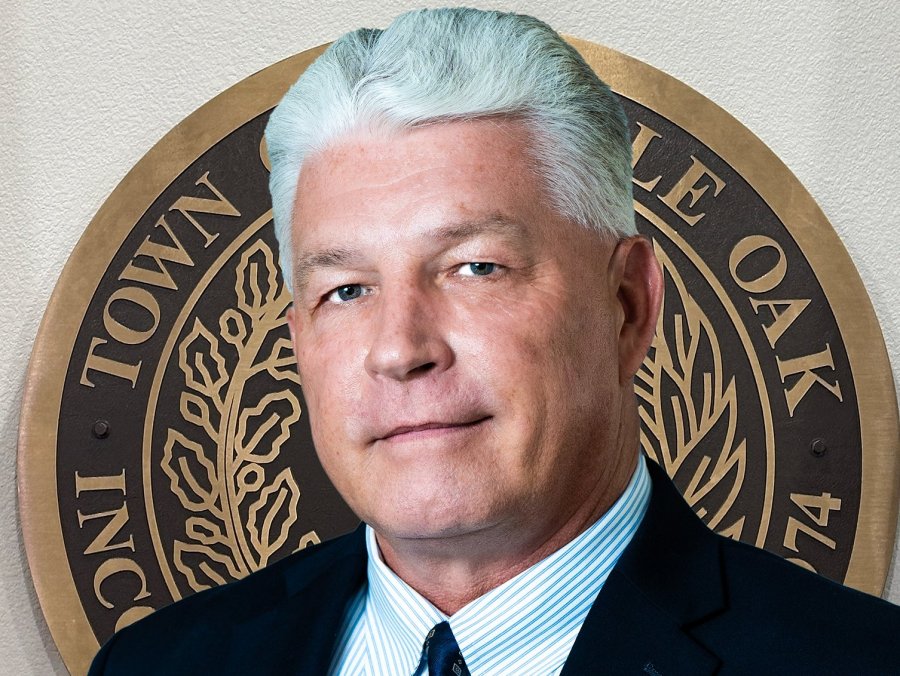
To stay up to date with all the exciting news and updates, please visit the Double Oak Town website at doubleoak.texas.gov. In addition to contacting Town Hall at 972-539-9464, Double Oak citizens may reach me at [email protected].