


By Taylor Millard, Contributing Writer
A southern Denton County woman who fled Iran decades ago says memories of her life after the Islamic Revolution shape her support for this year’s military action.
The woman asked that her name not be used because her daughter and brother still live there. She said authorities have harassed her brother because of his connection with her.
The Cross Timbers Gazette is identifying her as P.A.
Now in her 60s, she said the political repression she experienced – and the executions of her sisters – still shape how she views the war.
P.A. said she came forward because she believed it was important to explain why she supports U.S. and Israeli strikes on Iranian targets, even as polls show growing opposition among Americans to military action.
A majority (58%) of Americans somewhat or strongly oppose the war with Iran. Only 31% support it, according to a recent Economist/YouGov poll.
“I will put my two hands around their neck and shake them up and say, ‘Wake up. This is what you are asking for,’” she said. “You have no clue what would happen if these people get a nuclear weapon. Nobody would survive.”
Her support for military action, she explained, is rooted in her memories of Iran before and after the revolution.
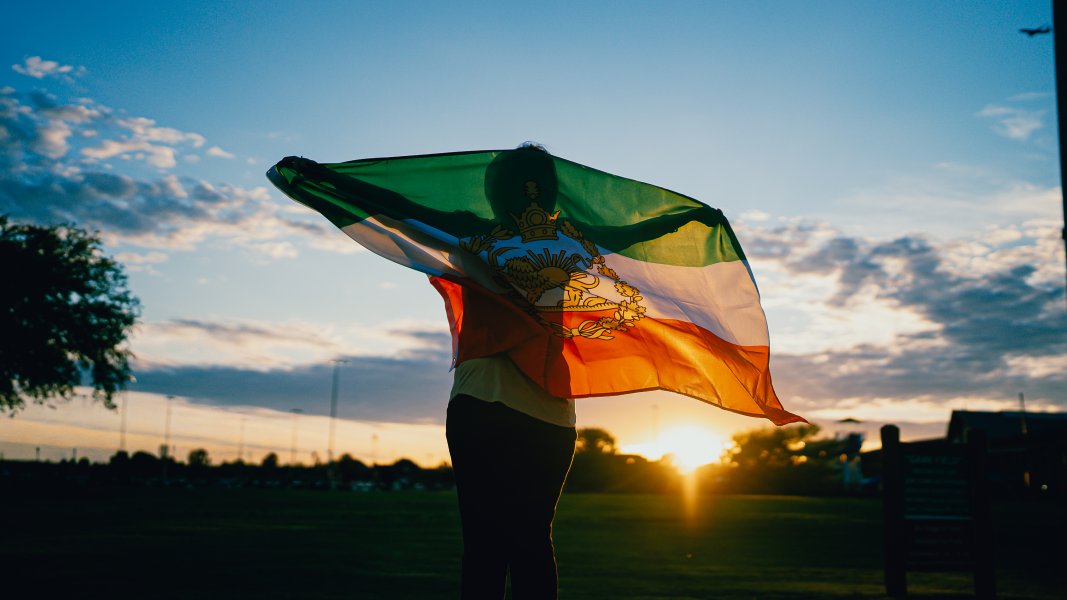
Pre-revolutionary Iran is often glimpsed today through decades-old photos online. She said everyday life then felt not unlike the United States or the West.
Her family of seven, she said, lived on one income and could still afford a house, a car and an education.
“It was great,” recounted P.A.
After the 1979 Islamic Revolution toppled the government of Shah Mohammad Reza Pahlavi and brought Ayatollah Ruhollah Khomeini to power, P.A. said life deteriorated rapidly.
“It was a disaster,” she said.
Her mother had to start working to help the family afford basic needs. It became harder to afford a vehicle or buy a house.
As a young married college student, the woman said classes like art, dancing, and music were cut as Iran’s hardline new government tightened social controls.
P.A. said protests continued during the first year after the revolution, but she believes authorities used that period to identify opposition leaders.
“By the end of the second year the regime starts arresting everybody, especially those who were involved in organizing,” she recalled.
She said police broke up demonstrations and prevented activists from selling political books. Repression also spread to religious minorities, with Christian, Zoroastrian and Baháʼí leaders imprisoned, she said.
The biggest blow to her family came the next year, she said, when authorities arrested and executed two of her sisters.
A 2024 report by a United Nations special rapporteur described the 1981–82 period as one marked by executions and severe repression targeting dissidents and opposition groups.
P.A. said one of her brothers was able to flee, but everyone else was stuck in Iran. At one point, she was imprisoned and interrogated.
“It felt worse than North Korea,” she said.
In 1990, she was also able to flee Iran.
Decades later in Denton County, those memories shape how she views the current conflict.
Her hope is that the U.S. and Israel keep targeting Iran’s underground missile cities to prevent it from striking back.
She believes many Iranians oppose the regime and would welcome outside action if it led to its downfall, despite the destruction it could bring. She believes that Iranians don’t mind if America or Israel blows up as much as possible if it forces out the mullahs and ends the climate of fear permeating society.
P.A. said Iranians can barely discuss politics with their own families because they don’t know if they’ll be reported to the government.
When asked to compare her life in Iran versus her life now in the United States, she said it’s no contest.
“I have the freedom to say, ‘I don’t like this president’ or ‘I don’t like this policy,’” she said. “Over there, you can’t do that.”